Menu



By Katerina Im, Bikeshare Hawaii Intern
Over the last decade, bike sharing has taken off in cosmopolitan cities across the world. Biking itself has numerous health and environmental benefits, and bike sharing is convenient and cost effective. As of 2021, there were over 3,000 programs across the world and that number has continued to grow.

The Meddin Bike-sharing World Map
South America (Brazil)
Based in Brazil, Tembici is the largest bike sharing company in Latin America. Tembici operates in three countries: Brazil, Argentina, and Chile, and has 18,800 bikes. This successful company has been popular among South Americans due to its “comfort” aspect. In 2022 study, 39%* of Tembici users cited “comfort” (convince) as their main reason for using the bike sharing system. One of the benefits of bike sharing is that riders do not have to pay outright for a bike, for maintenance, or storage. Another striking fact the study found was that percentage of usership among female Tembici riders was 38%* higher than the average percentage of female cyclists in countries where Tembici operates. Many women expressed their affinity towards safeness of the bike sharing program.
Additionally, Tembici’s success can be attributed to its partnerships with other companies in their community. iFood is a food delivery company, similar to BiteSquad, that works with Tembici in Brazil to use 2,500 bikes for their services. Tembici hopes to expand its network of riders and wants to add 10,000 bikes by the end of the year.
Europe (Netherlands)
Bike sharing’s popularity only rose in the recent decades, but was actually invented in Amsterdam in the 1965. The world’s first bike sharing program was called the Witte Fietsenplan (the White Bicycle Plan). The Witte Fietsenplan was started by a group of young activists who painted some bikes white and left them around the city for people to use free of charge. The white bikes were a symbol of protest against the growing number of cars in Amsterdam. Cars caused air pollution, burdened the city’s unfit infrastructure, and made streets dangerous for children to play in. However, the original Wittee Fietsenplan did not turn out to be successful because the bikes were quickly removed by police and Amsterdam’s city planners did not see biking as “the future.”
Today, there are multiple bike sharing programs in Amsterdam and 38% of all trips in the city are taken by bike (both personal and through sharing programs).
Africa (Rwanda)
In many African cities, air pollution is a major health and environmental concern. In the hustle and bustle of the cities, traffic can get heavy and many of the cars on the road are older models, which emit more pollutants.
Kigali, Rwanda just launched its first bike sharing program in partnership with Guraride in 2021. Guraride started out with 80 bikes and hopes to expand their program. To increase ridership and get the residents of Kigali accustomed to bike share programs, Guraride offers the first 30 days of their membership free.
Kigali hopes to use biking and bike sharing as a method to reduce carbon emissions and pollution in their city. There are plans to increase the length of bike lanes, making biking a safer and more viable transportation option in the city.
Asia (China)
China is infamous around the world for its air pollution. To combat their poor air quality and heavy traffic, the Chinese government and private companies invested large amounts of money into clean transportation over the last decade. Bike sharing blasted China’s urban streets starting in 2007, but by 2019 the bike sharing bubble burst and bike graveyards became prevalent. There were too many bikes and not enough users in Chinese cities.
Despite its massive failure, bike sharing has come back to China, but on a smaller and more carefully planned out scale. The more “thoughtful” bike sharing programs have shown success, especially with the help of AI in placing bikes/docks in locations with high biking demand. Additionally, electric bikes are being introduced to the bike share mix, making long distance biking easier. During the pandemic, biking has become more popular among Chinese citizens because it avoids the risks of catching illnesses on public transportation.
Australia
Similar to China, bike sharing in Australia also saw difficulties. Bike sharing programs dealt with problems of having too many bikes, not enough users, stealing, and bike littering. Many programs in Australia used the method of dock less biking, where users can simply park their bikes at bike racks or along sidewalks. While dock less biking may seem like a convenient idea, it also causes a lot of vandalism and stealing. Australia also has harsh helmet and bike laws with significant fines that may scare away potential bikers.
Certain bike share companies left Australian cities, but others are starting up on a smaller scale. There is also hope that e-bike systems will be more popular in Australia.
North America (New York, USA)
In 2013, the Citi Bike program, part of Lyft, was launched in New York City and has grown to be the largest bike sharing system in the U.S.. After the height of the pandemic, Citi Bikes have grown even more popular among New Yorkers and the company cannot keep up with the demand. New York City has a goal to increase the size of the fleet from 24,000 to 40,000 bikes by the end of 2024.
New Yorkers love bike sharing because it is a convenient, environmentally-friendly, and fast option. Traffic in New York is always extremely bad, so in many instances, biking can be faster than driving. NYC is also making it easier and safer for bikers by adding more bike lanes— both regular and protected.
Not all residents are liking the rise in bikers, however. The expanded bike lanes compete with outdoor dining spaces, complaints from drivers, and fewer parking stalls. However, overall, both New Yorkers and their government officials are looking to bike sharing as an integral part of the future of clean transportation in the most populated city in America.
Of course, in Hawaii, we have our own bike sharing program— Biki! With 130 stations, Biki provides a great “green” and convenient way to travel throughout downtown Honolulu. Whether you are a local or a tourist, include Biki as a part of your transportation plan to travel around the city of Honolulu.
Guest Blogger: Katerina Im is a rising Senior at Punahou School. She is very passionate about environmental issues and is especially interested in climate change and plastic pollution. Learn more about her non-profit, Plastics 4 A Purpose.
Sources
Sources:
- https://www.pbsc.com/blog/2021/10/the-meddin-bike-sharing-world-map#:~:text=As%20of%20August%202021%2C%20there,sharing%20systems%20across%20the%20world
- https://labsnews.com/en/news/business/tembici-bike-sharing-study/
- https://www.theguardian.com/cities/2016/apr/26/story-cities-amsterdam-bike-share-scheme?scrlybrkr=d3cfcce3
- https://www.bbc.com/news/av/world-africa-59318660
- https://www.weforum.org/agenda/2020/07/4-big-bike-sharing-trends-from-china-that-could-outlast-covid-19/
- https://findingspress.org/article/7615-stationless-in-sydney-the-rise-and-decline-of-bikesharing-in-australia
- https://www.bicyclenetwork.com.au/tips-resources/bike-friendly-communities/public-bikes/
- https://www.nytimes.com/2021/12/02/nyregion/citi-bike-parking-docking-station.html
We recently installed a Biki Stop outside of Planet Fitness at Ala Moana Shopping Center! PF is welcoming us to the neighborhood by offering riders an amazing deal through July 20. Ride on over to their fitness center off Kapiolani Boulevard and get access to their clean and spacious Judgement Free Zone for only $1 down and $10 per month.

Planet Fitness Ala Moana is also helping us celebrate the new Biki Stop and Bike Month with free snacks and refreshments for cyclists at our Energizer Station on 7/19. Ride by the Planet Fitness Biki Stop from 3:30 - 6pm! Learn more at GoBiki.org/BikeMonth
by Katerina I., Intern
Have you filled up your car’s tank recently and gasped at the price? With gas prices soaring at the pump, the fossil fuel industry is really putting a price on summer fun. In Hawaii, as of late June 2022, regular gas is averaging $5.72/gallon and diesel is a whopping $6.17/gallon! As costs continue to creep up, now is the time to consider switching up your commute routine.
Estimated costs associated with owning a car in Honolulu:
According to a 2021 study by Ulupono Initiative, the cost of owning a vehicle in Hawaii is $8,100 annually, or $675 per month. However, Ulupono used census data compiled by the accounting firm Deloitte – which shows 80% of Hawaii households own two or more cars and thus face a $16,200 annual expense, or about $1,350 a month for transportation. These transportation costs include gas, maintenance and insurance.
Alternatively, Biki's Commuter Plan offers unlimited 30 minute Biki rides for $15 per month, and the Voyager Plan will get you unlimited 60 minute Biki rides for $25 per month. By switching from your car to a Biki Commuter Plan, you could theoretically slash your transportation bill by 98%!
And we haven't even touched on the societal costs of driving. Air, water and noise pollution, costs to repair and build roads and hire enforcement, traffic collisions and fatalities... the list goes on. And all tax payers front the bill. Ulupono's report reveals that Hawaii's vehicle transportation system comes with an annual price tag totally $21.8 billion dollars. Only $10.6 billion is borne by consumers in the form of vehicle ownership costs, while $11.2 billion is borne in the form of state and county expenditures.
Here at Biki, we aren't anti-car and recognize that there is often a time and place to utilize modes of transport other than bikeshare, including personal vehicles. However, it's also worth considering how much your household could save by reducing the number of cars in your home, or replacing some of your car trips with Biki rides. Many Biki members seem to have caught on to this realization, with 11% reporting they reduced the number of vehicles in their household (up from 8% in 2018), and 49% reporting they drive less often since joining Biki.
Making the change
As people go back to working in-person, it’s time to reduce the number of drivers on the road. You don't necessarily have to make a full switch from being a driver to a bicyclist, but you can try to utilize multiple modes of transportation to reduce your costs. For example, if you sell your car but still want to get across the island, you can opt for a bus pass ($80/month) and a biki membership ($15/Month). You can take Uber/Lyft when necessary, opt for Hui carshare or Turo for longer day trips, or figure out a carpool arrangement with friends or coworkers.
The more options our residents have to get around, the less likely we'll need to depend on owning personal vehicles. Our community is being more multi-modal and this reduces inequalities, increases connectivity and makes our island a better place to live. We're happy that Biki can be a part of it!
Guest Blogger: Katerina Im is a rising Senior at Punahou School. She is very passionate about environmental issues and is especially interested in climate change and plastic pollution. Learn more about her non-profit, Plastics 4 A Purpose.
by Peter R., Guest Blogger
Where did bikeshare start? You probably won’t be surprised.
Along with a legal red-light district, public pot smoking and canals, Amsterdam is known as a city where cyclists rule. It has not always been so. Amsterdam leaders got serious about reducing auto congestion by supporting cycling in the 1970s. Since then, the city has become an elaborate network of cycle-paths and lanes, so safe and comfortable that even toddlers and elderly people use bikes as the easiest mode of transport.
So, you probably won’t be surprised to learn that in 1965, Amsterdam was home to what is now considered the first bikeshare system. Luud Schimmelpennink – considered the father of bikeshare – started Witte Fietsen ("White Bikes"). He collected bicycles, painted them white and simply left them on the streets for public use. With no locks or payment system, however, many bicycles were quickly damaged and stolen. Witte Fietsen seemed like a failure but it laid the foundation for bikeshare.

Though it took 20 years to revive, the concept was not forgotten. The next major bikeshare, called Copenhagen City Bikes, eventually secured public and private funding which allowed it to flourish. Bycykler København featured fixed docks where riders deposited a coin to unlock a bike. The coin was returned when the bike was returned to a dock.
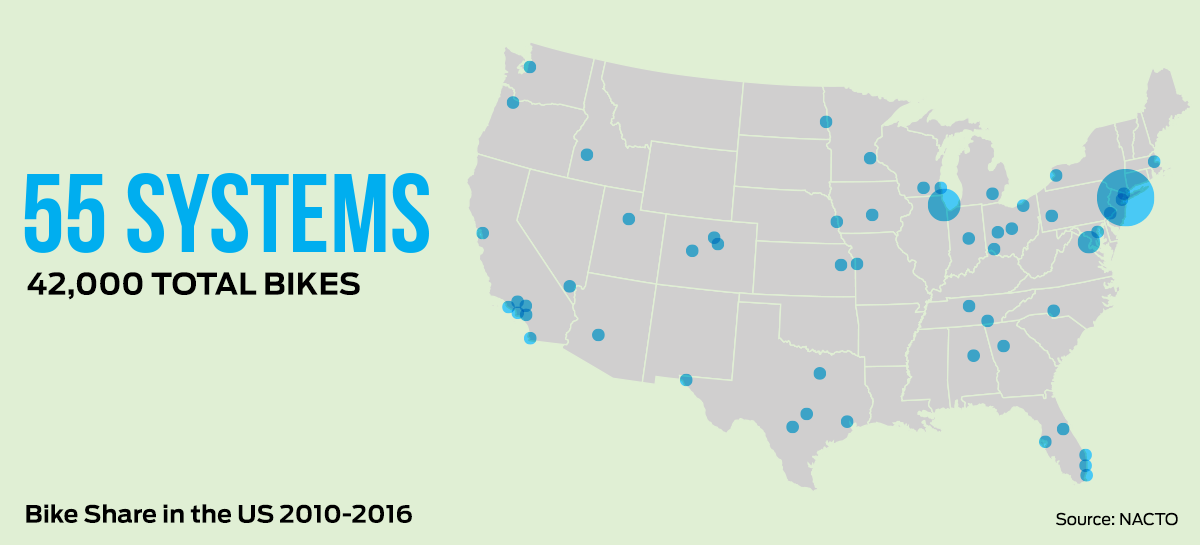
It was only in the 2000s, and particularly within the last decade, that bikeshare would catch on. The transport mode grew from just 13 in 2004 to 855 in 2014.
Washington D.C was the first US city to launch a bikeshare system: Capitol Bikes in 2010. It continues to be one of the most popular systems in the nation and has attracted several other scooter and e-bike players.
Bikesharing in Hawaii
Hawaii B-Cycle was Hawaii's first introduction to modern bikeshare in 2011. It was a three-year pilot project limited to Kailua Oahu. The two-station and 12-bike system was a partnership between the State Department of Health, Momentum Multisport, and B-Cycle.
A year later, the Hawaii Clean Energy Initiative & the State Department of Health identified bikeshare in Urban Honolulu as a key strategy and a Bikeshare Working Group was formed with the goal of bringing a public, large-scale bikeshare system to Honolulu.
Biki was launched in 2017 it has been one of the most heavily used systems per-capita in the country. We face the same challenges as other cities in the early transition to more bicycle use: vandalism, funding challenges, some lingering antipathy from motorists. But, in just 5 short years, Biki has become fully integrated into the city and is regularly used by more than 100,000 annual riders. Bikeshare makes cycling more accessible and more affordable for residents and visitors, and gets more people on bikes. And when more people are on bikes, there is more demand for safe places to ride. In just 5 short years the city has improved and extended existing bikeways, installed bike infrastructure on Pensacola, Ward and Alakea, and planned for the design of several more complete streets projects.
Will Honolulu ever be an Amsterdam or Copenhagen or even Paris for bikeshare and other personal or “micro” mobility? Only time will tell, but we think we're headed in the right direction.
Since the start of the 2022 legislative session on Jan. 19, lawmakers have introduced 2,546 bills. Several of the state bills introduced are transportation-related and will impact mobility and safety on Oahu. Bikeshare Hawaii has recently submitted testimony in support of the following five state bills.
Permits a bicyclist to proceed through an intersection from a right turn only lane if they cannot safely merge into the thru traffic lane, provided they signal intention to merge left. Permits a bicyclist to proceed in a right turn only lane when approaching an intersection, even if they do not intend to turn right, provided that they do not pass a stopped vehicle and that they exercise reasonable safety when passing a moving vehicle. Track the bill.
Why we support this: SB2299 will ‘legalize’ a common and safe traffic movement [cyclists proceeding straight ahead in a marked /signed right turn lane] that many bicyclists have to utilize on roadways that do not provide for a dedicated marked bike lane or bike box approaching an intersection.
Additionally, this change also helps improve pedestrian safety by shifting more cyclist traffic from utilizing sidewalks at arterial intersections.
Additionally, this change also helps improve pedestrian safety by shifting more cyclist traffic from utilizing sidewalks at arterial intersections.
Update: Report adopted; Passed Second Reading, as amended (SD 1) and referred to Judicial
SB3274 will establish the Multimodal Transportation Branch of the State of Hawaii Department of Transportation to increase funding, pursue grants, and work on projects focusing on safe, low user cost pedestrian and bicycle infrastructure. Track SB3274.
Update: Passed Second Reading, as amended (SD 1) and referred to WAM. AND the committee(s) on WAM recommend(s) that the measure be PASSED, WITH AMENDMENTS.
Establishes the Transportation Improvement and Modernization Commission to help ensure the Department of Transportation achieves states goals and outcomes while improving reporting to provide better transparency for elected leaders and the public. Track SB2834.
Update: Report adopted; Passed Second Reading, as amended (SD 1) and referred to WAM. AND the committee(s) on WAM recommend(s) that the measure be PASSED, WITH AMENDMENTS.
SB2517 establishes a goal for the Department of Transportation to have an unspecified percentage of commuting trips be by bicycle or electric bike by 2030. Track SB2517.
Update: The committee on TRS deferred the measure for the 2022-2023 session.
SB 3255 would will appropriate funds for capital improvement projects in the Waianae district to address traffic mitigation. Such projects should include local transit enhancements, complete sidewalk network, enhanced intersections and protected bike lane. Track SB3255.
Update: Report adopted; Passed Second Reading, as amended (SD 1) and referred to WAM.
Legislative items (text and video) can be searched at this link: https://www.capitol.hawaii.gov/home.aspx
By Brendan Schultz, Biki Ambassador
I don’t know how to drive. I do not even know which pedal is the gas and which pedal is the brake. Thanks to Biki in Honolulu, there is no need for me to learn.
I was born into a military family in Hawaii and spent my childhood bouncing around the United States and world. For my final year of high school, a time when most teenagers are learning how to drive, I found myself in Macedonia, a small country in Southeastern Europe that most people have never heard of.
As a consequence of living in Macedonia, I never learned how to drive at the time most teenagers are getting their license tests. Now living back in Hawaii, the Biki system makes Honolulu one of the most livable cities to go car-less. Within the urban core, I am rarely more than a three-minute walk away from a Biki station. There is a station next to nearly every major destination – from the Blaisdell Center to grocery stores.
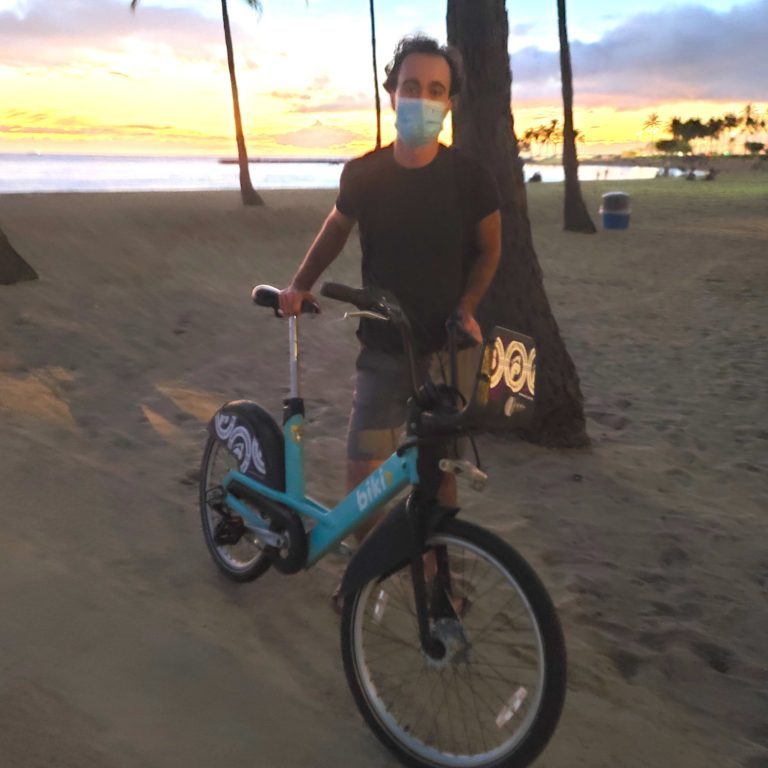

Riding a bike from one place within the city to another, when taking into account the time it takes to find parking, takes about the same amount of time needed to drive. I do not have to worry about my personal bike being stolen, or if my plans change and I catch a ride home with a friend instead. My transportation costs are fifteen dollars a month; the increasing price of gas is something I never have to be concerned about nor is the high cost and availability of parking. I have the opportunity to exercise while getting around. And most beneficial, the feeling I get when biking by the ocean with the breeze flowing through my hair makes living in paradise all the much better.
With a constantly expanding network of stations and bike lanes throughout Honolulu, I urge you to try making Biki your primary form of transportation for even just a week. You won’t regret it.
By Jasmine Utu, Biki Ambassador
I’m currently here in American Samoa for work and have been for the past month. After 30 days, you start to realize the normalcies and routine that you actually have. Mine definitely included biki (along with Moku Kitchen, but that’s another story). I started to have “withdrawals”.
For most of the island, transportation is either done by car or by mini-buses (Tacoma size pick-up trucks with campers going around the island to pick up students and residents). I saw a few individuals on bicycles and noticed their rides were to the next couple of houses or so. Which makes sense because roads aren’t as well maintained, and bike lanes are non-existent.
I realized how lucky I am to be able to have convenient options at my disposal for commuting and recreating. It is a privilege. Choices that I can pick and choose to get from where I am to where I want, or need, to be. And not only that, but to be able to bikeshare nonetheless.

I work in tech and to think of bikesharing as a piece of modernization was something I hadn’t given much thought because I was so familiar with it as part of my everyday life. But if you’ve never had the option to bikeshare, you’d never know what you’re missing out on. However, living in a community that has those opportunities, it’s made me more grateful and more motivated to share it with others.
In places like American Samoa, many of the roads are one way in and one way out, rural, and loaded with trucks and cars piling in line just to get to a village less than 5-10 miles away. Progressing technology and enriching communities doesn’t have to look too futuristic and lose the heart of the home. It could be simplistic. Paved roads, bike lanes, and reliable bikes. Island-sized areas with less unnecessary car congestion, adding a more sustainable commute, and increasing an active lifestyle, all while matching the pace of life.
Many residents said engineering the roads to be less overgrown and keeping them maintained to sustain resilience against weather conditions, would be a step towards the modernization necessary for their home and community. It’s the little things that can have such a big impact. Imagine even our own Oahu with more bike lanes, bike stations, bikesharing, and maintained roads? I think we can all agree perfectly maintained roads and paths sounds blissful. Sometimes it takes getting out of your own neighborhood and comfortable schedule to gain a little perspective and inspiration.
For now, it’s baby steps towards seeing a future that I want for Honolulu and the rest of Hawaii. It’s using what’s already in my hands. Time and amateur skill to teach a friend how to ride a bike, get someone going on their first biki experience, gather a group of friends to get out and ride to your favorite beach spot, or just talk to people in my workplace and community about bikeshare. It’s funny how biking can elevate a conversation to many directions – nostalgia, jitters and butterflies of trying it, new thoughts, considerations, and the classic debate… pronouncing biki as "beekee" or "bick-ee".
Despite how I choose to say it, I’m grateful for the opportunity to biki, to have it in my city, and to have the privilege to share it with others. A classic piece of technology to restore a neighborhood and progress a community.
Waikiki Chocolates is offering Biki Members 10% off their total purchase.
Satisfy your chocolate craving with 40+ truffle flavors; holiday truffle sets, or pick up some choco bombs and macadamia nut clusters as a holiday gift.
To redeem this offer, show proof of Biki Membership (App or Biki Card) when purchasing in-store.
744 Kapahulu Ave, Honolulu HI | www.waikikichocolates.com

To celebrate the season of giving, we're teaming up with Hawaii Bicycling League to give away FREE helmets! We have over 150 bicycling and multi-sport helmets to distribute, ranging in size from toddler to adult XXL.
We'll be setting up at The Barn at SALT Kakaako (327 Keawe St, Honolulu) on Wednesday, December 1 between 4pm -6:30pm.
SALT Kakaako is conveniently located by Biki Stop #204 (Auahi & Keawe).
To qualify for a free helmet:
- Participate in a brief helmet fitting to ensure it fits properly.
- Show proof of Biki Membership (Biki App or Biki Card), or, bring your own bike!
Must be present to receive a helmet and only one per person. Available while supplies last. No purchase necessary.
Don't have a bike or biki membership?
The Biki Crew will be on hand to help you sign up for a membership. Proof of Hawaii residence is required to sign up for Kama'aina Plans. Browse our plan offerings here.

WHAT ELSE TO EXPECT:
- Got any questions or concerns about safe biking in Hawai‘i? Get the answers from the experts at the Hawaii Bicycling League
- Learn about bike routes that are right for your ride (or check out HBL's O‘ahu Bike Map here)
- Meet and talk story with some of our Biki Ambassadors who can share some special tips & tricks with you on getting the most out of your Biki rides!
- Pick up some extra cycling swag (reflective goodies & more)
- Find out what exciting bike events are coming up that you & your friends can be a part of!
EVENT SPONSORS
Helmets were donated by the Hawaii Department of Health, Neurotrauma Program. This event is brought to you by Bikeshare Hawaii, Hawaii Bicycling League, Better Bike Share Partnership, and SALT at our Kakaako.


Name and plan type: Eric and Charlotte, Voyager Plans
We signed up for Biki this past May after participating in the Hawaii Bike Challenge. We wanted to see if biking was genuinely something we could do more of. This also coincided with the time we sold one of our cars!
How has Biki impacted your life? We exercise more often thanks to Biki, and we are definitely saving money. We were able to downsize to just one EV and are often riding Biki while that charges.
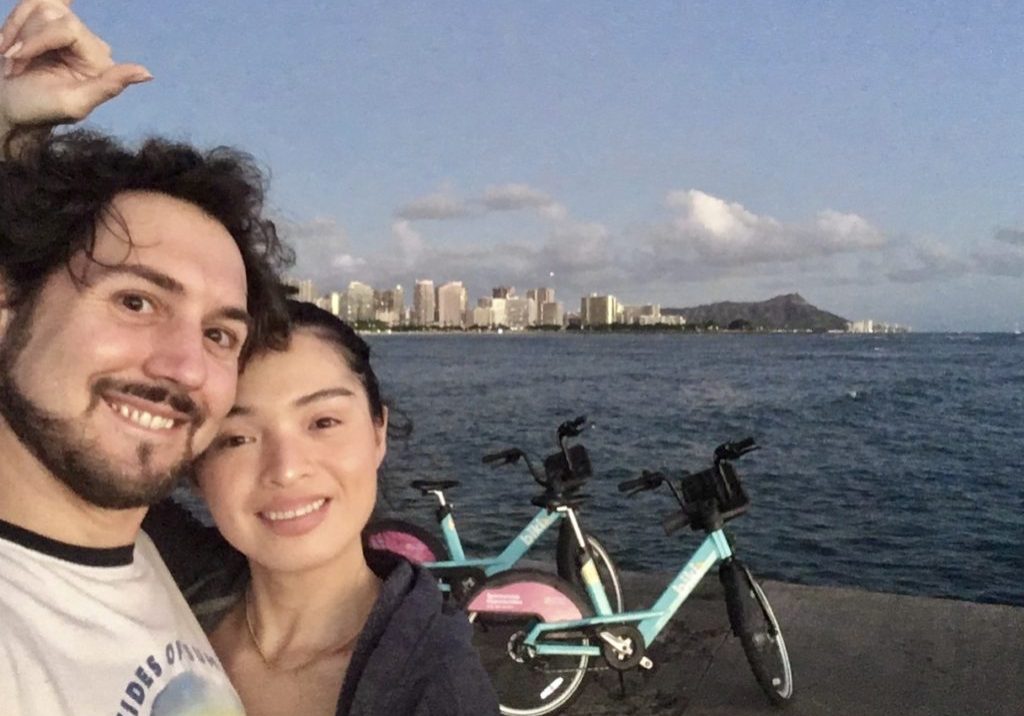
What do you like about Biki? We like that we don’t have to store or maintain the bikes, or worry about carrying (and perhaps losing) locks, keys, and chains with us. We know where the stations are and we don’t have to worry about theft. Even if we weren’t signed up for a Biki membership, we like that the bikes would still be available to us, and at a cost that seems reasonable for the ride, at least to us.
How do you think Biki benefits the Honolulu community? At least for those living in town, Biki is a great way to realize the benefits of the sharing economy. Most importantly, it raises awareness that cycling is, or at least maybe ought to be, a valid form of serious transport. If we’re going to stave off some of the continuing destruction caused by the greenhouse-gas-driven climate crisis it’s really people in their local community changing their habits that’s going to save the day, isn’t it? People are still mindlessly spending thousands of dollars each year buying and maintaining gas-guzzling cars for the privilege of getting stuck in the very same traffic they themselves are creating by participating in our current commuting culture. It seems there’s a better way, better for our physical health, and our mental wellbeing, better for our pocket books, and for this earth we rely on, too. It may seem a bit weird that such a response may be inspired from utilizing one's local bikeshare service, and yet there it is, and here we are! Really though, feel free to try out Biki, you may have a lot of fun, or find it really convenient, and either way, you won’t be polluting the planet.
Favorite place to Biki: Ala Moana Beach Park is close to us, and getting there now feels safer thanks to the dedicated bike lanes available along much of Ward Avenue. We also love the shade when riding along Kapiolani Park.
Best Biki Tip: If you’re bringing a water bottle, make sure there’s some portion that can have the front basket’s elastic band loop through it. We also recommend bringing a pocket-sized bottle of hand sanitizer to apply to our hands and the grips both before and after our rides. Keep the community safe and healthy!
Have a Biki story you want to share? We'd love to hear it! Email us at kelsey@bikesharehawaii.org.