Menu



UPDATE: The Pensacola Protected Bike Lane celebrated the official opening on Friday, September 25. The two-way protected bike lane spans from Wilder Street to Kapiolani Boulevard on the Diamond Head side of the street. This project is one of the Department of Transportation Services complete streets initiatives, and a step towards increasing the connectivity and safety of our community. Learn more.
What will it look like?

Image: Honolulu Complete Streets
The Pensacola project will look similar to the King Street and South Street protected bike lanes (completed in 2014 and 2017): a two-way protected lane on a one-way street. This means that, while drivers can only travel in the mauka to makai direction, cyclists can ride both ways. This design provides the necessary space and protection for cyclists while reducing the risk of collisions with vehicles.
According to Hawaii Bicycling League, shortly after the completion of the projects, bicycling increased on King St by 125% and on South St by 381%!
Who will it serve?
The Pensacola protected bike lane will create a safe bicycle route to Makiki and Ala Moana/Kakaako, connecting riders to their homes, places of employment, and popular destinations such as Ala Moana Beach Park and Ala Moana Shopping Center. It will conveniently intersect King Street, one of the most popular routes for bike commuters.
Several Biki Stops are already located on or within close proximity to the route. See map.
Construction is expected to conclude this summer!
For more information on this project and other infrastructure updates, please visit: honolulu.gov/completestreets/urbancore

Screenshot from Biki Mobile App
This month, 120 employees representing 7 different businesses have been participating in the first-ever Oahu Commute Challenge, hosted by STCH and Blue Planet Foundation. Participants were equipped with a monthly Bus pass, rideshare credits and a Biki Commuter Plan, and encouraged to get out of their personal vehicles and switch to cleaner, healthier and more efficient modes of transportation for the chance to win prizes. Watch this video to learn more!
Resolution 19-204 would require Bikeshare Hawaii, the 501(c)3 non-profit organization that manages Biki, to prematurely compensate the City for Biki Stops located on City property. The consequences of this resolution are severe and would negatively impact our riders and our service.
Shop at Foodland and donate to Bikeshare Hawaii during the month of September!
During the month of September, donate to Bikeshare Hawaii during your shopping trips to Foodland through the Give Aloha Program! Best of all - the Western Union Foundation and Foodland will match a portion of your donation, so each contribution has an even bigger impact.

How to donate
- Shop at Foodland or Sack N Save! Check out our system map to find a Biki Stop by a store near you.
- Show your Maika'i card (or give phone number) at checkout.
- Tell the cashier you wish to make a donation to Bikeshare Hawaii (code 78990) and the amount of your donation, up to $249.

Donations to each organization are tracked, and Foodland’s matching gift is divided proportionately among all participating organizations based on customer donations to the organizations.
Why donate?
Until Biki fare revenue hits a certain threshold and the initial equipment purchase is paid off, Bikeshare Hawaii will continue to be funded entirely by grants and donations from organizations and individuals. These contributions support our work in planning and designing the system and targeted programs in alignment with city and state initiatives and community priorities. Some of the ways that our small team of three use resources to accomplish this are:
- Hosting more than 70 free workshops and tutorials with nearly 600 participants to date
- Launching a new Access Program for income-qualifying residents
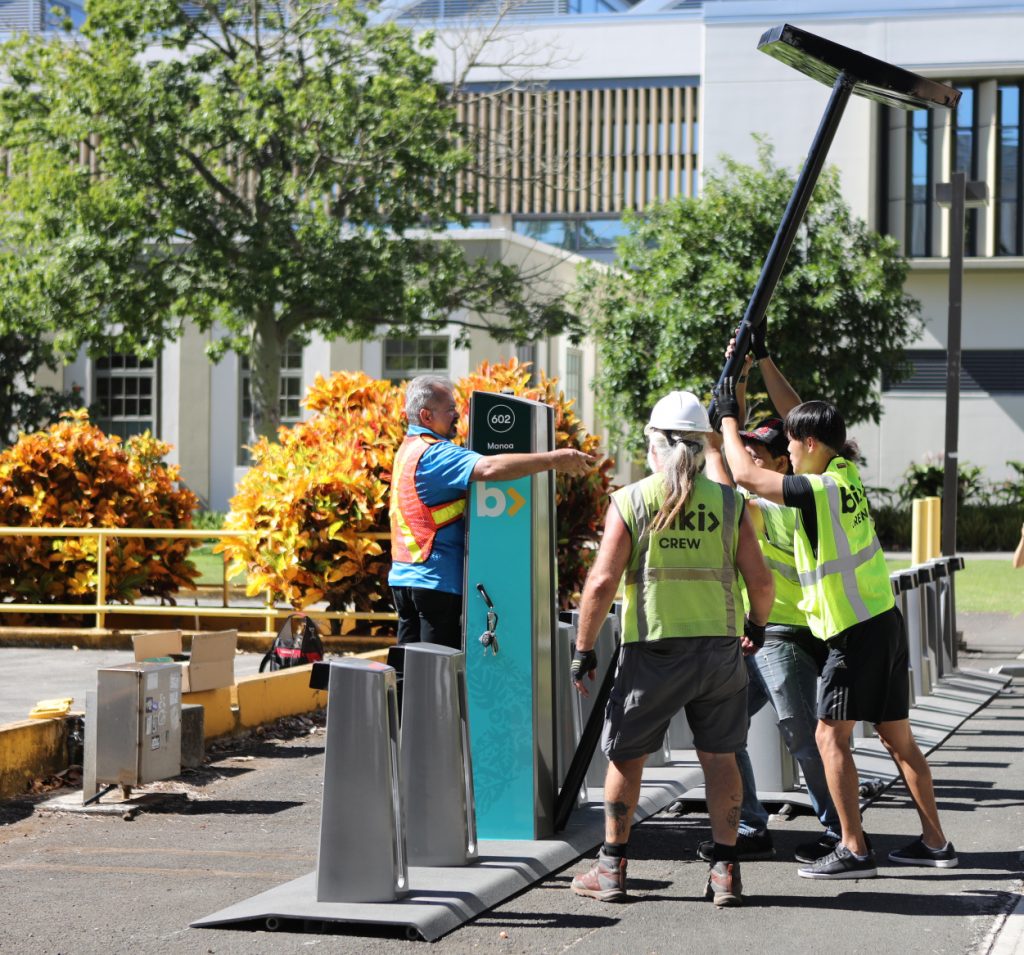
- Targeting residential areas for site placement (Manoa, Makiki, Iwilei) to serve the local community
- Speaking at neighborhood board meetings, schools, workplaces and public events to educate and inform our residents about the environmental, economic and health benefits that bikeshare brings to a community. Targeted outreach with seniors, youth, public housing, and community health centers.
- Developing partnerships that support local non-profits like Meals on (Biki) Wheels) and Biki Street Art Tours
- Advocating for complete streets and increased and improved bike infrastructure
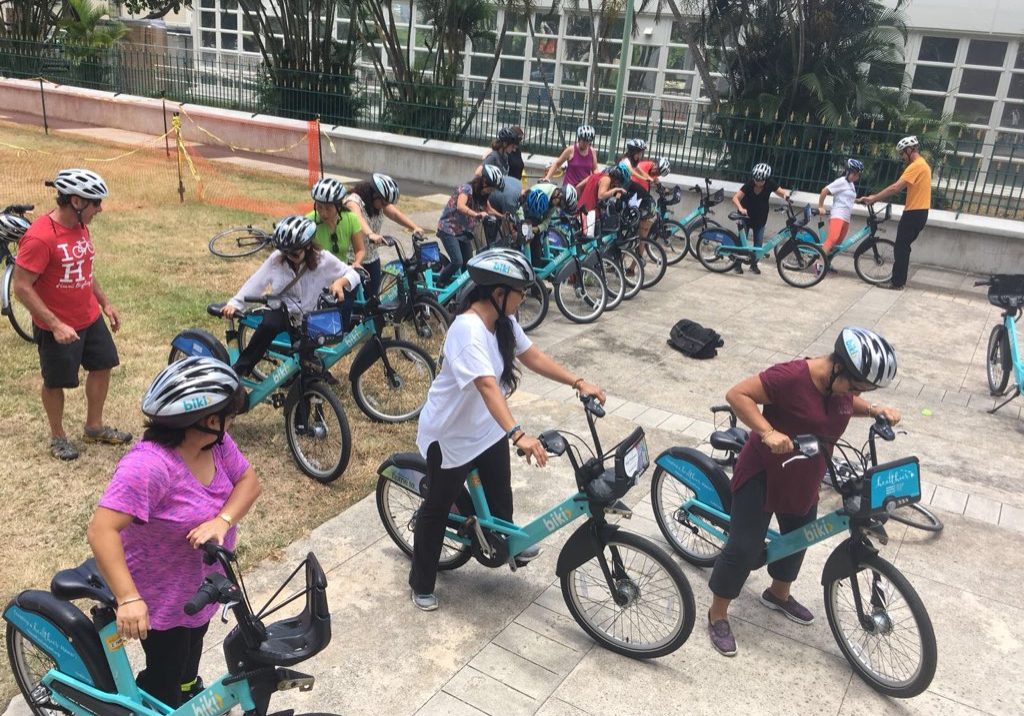
Biki workshop with Hawaii Bicycling League
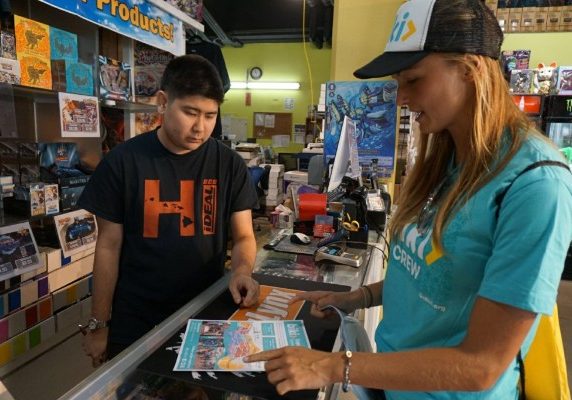
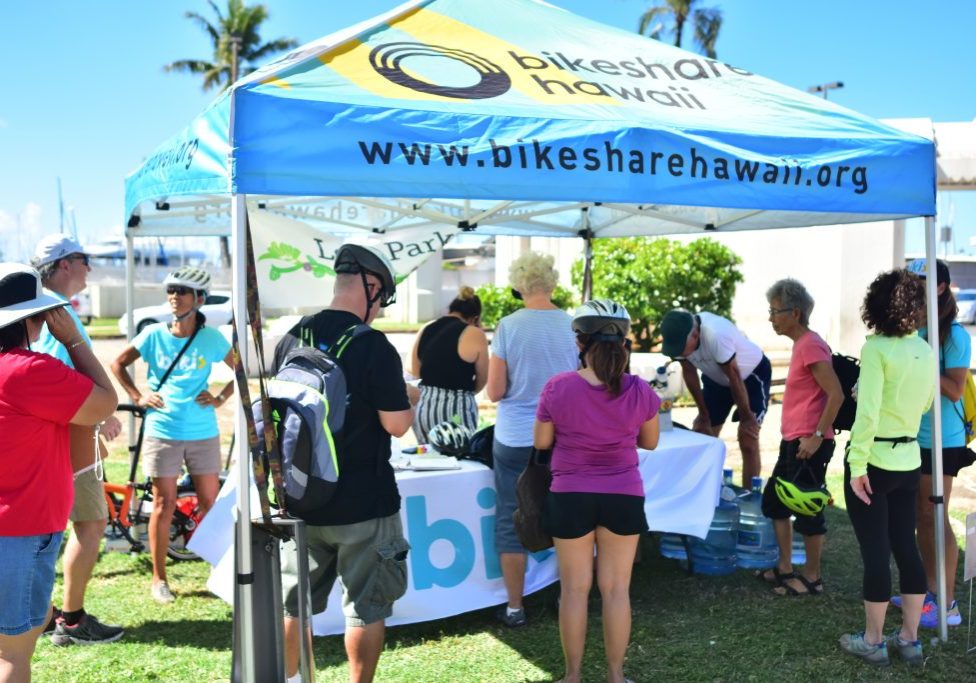
In-person outreach
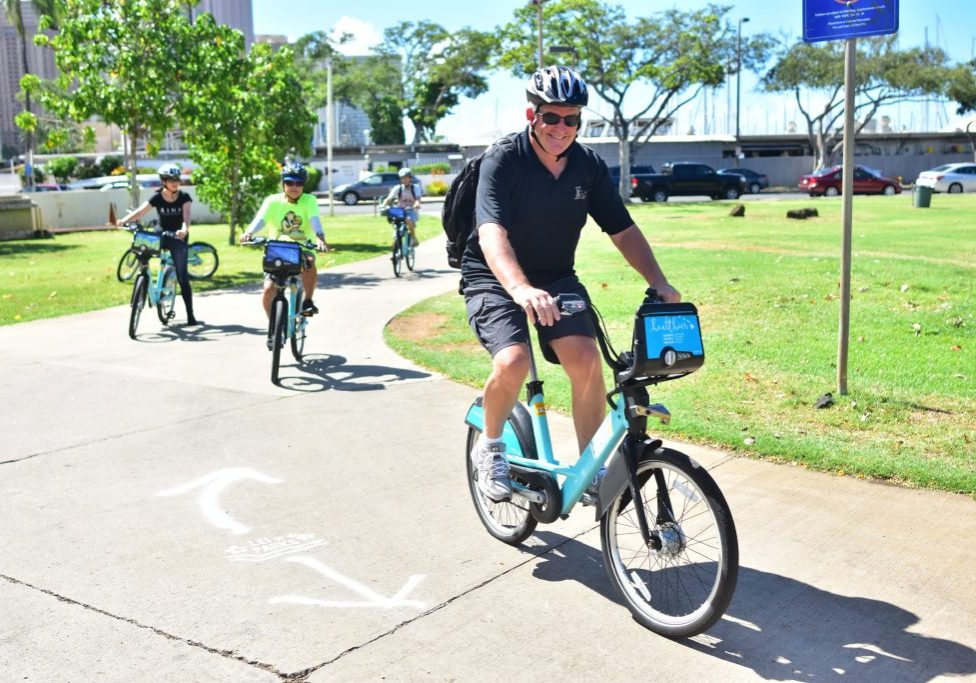
Biki Social Rides Program for residents 50+
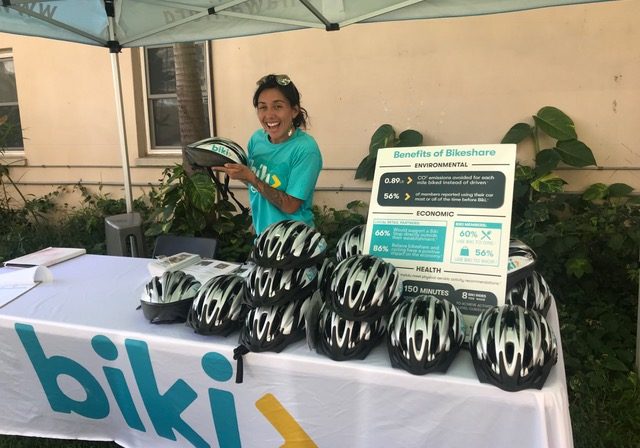
Helmet distribution at Waikiki Health
MISSION STATEMENT
Bikeshare Hawaii’s mission is to provide the public with high quality, convenient, reliable, and affordable bikeshare services that enhance community health and livability, strengthen our public transportation system, and connect people to more places where they live, work and play throughout Hawaii nei.
Current Bicycle Transportation Legislation in DC
Guest Blogger: Michelle K.
On July 30, 2019, the US Senate passed a bipartisan bill, S2302, called America’s Transportation Infrastructure Act. The name makes me think of freeway cloverleaves and our HART rail system, but actually there are several bicycle-centric programs included in the funding that will update current bike infrastructure, as well as earmark money for some pilot programs that address our future transportation needs. I read that over the last 25 years, federal surface transportation legislation has committed around $15 billion, that’s with a “B”, in bike lanes, bike paths, trails, and other projects that make bike commuting and recreating safer and easier throughout the United States.
1. Transportation Alternatives Program
The popular TAP, Transportation Alternatives Program, would get $1.2 billion. This one is popular because it is a major source of federal funds for our local government agencies to tap into via grants that address concerns that are specific to Oahu bike riders and make our current funding efforts a reality.
TAP helped fund 30% of the expansion of the Biki bikeshare system in 2018. A nice overview of funded Oahu TAP projects can be found here.
2. Recreation Trails Program
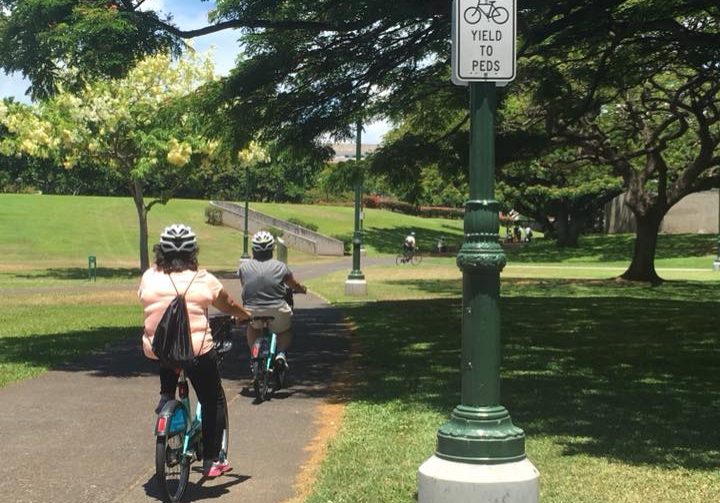
The RTP, Recreation Trails Program, provides funds to develop and maintain our off-road bike trails and trailheads. The funding for this program already comes from fuel taxes, not for your car, but the “gas” you buy for your boat, jet ski, ATV, and other recreational vehicles. What’s included in this current bill is a study that looks at how those fuel taxes are collected and distributed. Results of this study could end up increasing how much money our state allocates to make these improvements in off-road infrastructure.
3. Safety Incentive Program
A third program would fund grants to local municipalities for infrastructure that is designed to make improvements to pedestrian and bicyclist safety. Things like street lighting, signage, and safety barriers in between bikeways and vehicle lanes come to mind. This one is aptly named the Safety Incentive Program and there is currently $500 million proposed in the Senate’s budget for it.
This version of the bill also includes funding for a 'Center of Excellence' that would, among other things, evaluate how docked and dockless bikeshare programs, like Biki, influence real estate values and urban design plans. Personally, when I was working with a realtor to purchase my Honolulu condo recently, proximity to a Biki station was high on my needs list. I’m interested in knowing how this translates into property values, if at all.
show your support:
This bill (Safety Incentive Program) is now being discussed in the US House and will go through several committees before it reaches the President’s desk for final approval, so now is a great time to email our congresspersons and ask for their support. The following folks represent you as Oahu residents and sit on the committees that will review this bill and figure out where the funding will come from:
Senate Banking Committee: Senator Brian Schatz (https://www.schatz.senate.gov/contact)
House of Representatives Transportation Committee: Henry J.C. Aquino (repaquino@Capitol.hawaii.gov)
References:
about our guest blogger:
Michelle moved to Oahu a little over a year ago and quickly became a Biki user as she is determined to maintain her car-free lifestyle for as long as possible. This is her first blog post for Biki.
Have a story or bike-related news to share with the Biki community? Email kelsey@bikesharehawaii.org to get in touch.